Learn how PHP for depression provides structured daytime treatment, therapy, and psychiatric support without inpatient hospitalization.

Depression can slowly take over daily life. Things that once felt simple may start to feel exhausting. Getting out of bed, going to work, answering messages, or even taking care of yourself can become difficult. For some people, weekly therapy sessions may no longer feel like enough support. Symptoms may keep getting worse even with counseling, medication, or help from loved ones.
A partial hospitalization program (PHP) for depression is a structured mental health treatment program for people who need more support than traditional outpatient therapy, but do not need 24-hour inpatient hospitalization. PHP gives individuals access to intensive daytime treatment while still allowing them to return home at night. For many people, PHP creates a safe middle ground between weekly therapy and inpatient care. It offers daily support, professional guidance, and a clear treatment structure during difficult periods of depression recovery.
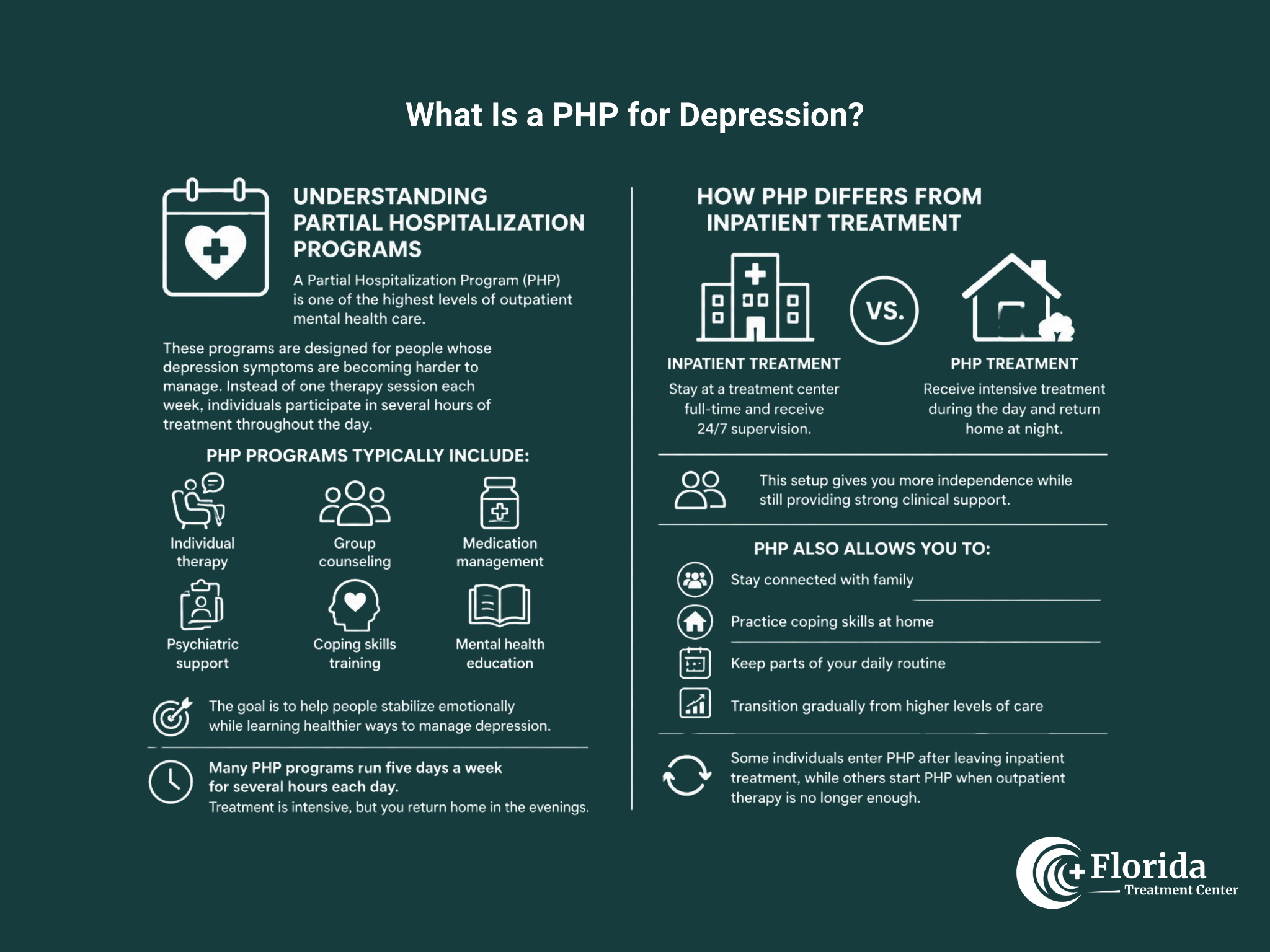
A Partial Hospitalization Program, also called PHP, is one of the highest levels of outpatient mental health care. These programs are designed for people whose depression symptoms are becoming harder to manage on their own. Instead of attending one therapy session each week, individuals participate in several hours of treatment throughout the day.
PHP programs usually include:
The goal is to help people stabilize emotionally while learning healthier ways to manage depression. Many PHP programs run five days a week for several hours each day. Even though treatment is intensive, individuals still return home in the evenings.
PHP is different from inpatient hospitalization. In inpatient treatment, individuals stay at a treatment center full-time and receive 24-hour supervision. PHP allows people to receive intensive treatment during the day while continuing to sleep at home at night. This setup gives individuals more independence while still providing strong clinical support. For many people, that balance can feel more comfortable and less overwhelming.
PHP also allows people to:
Some individuals enter PHP after leaving inpatient treatment, while others start PHP when outpatient therapy is no longer enough.
Depression affects everyone differently. Some people are able to manage symptoms with weekly therapy and medication. Others may need more structured support.
Signs that someone may benefit from PHP can include:
When depression starts affecting everyday life in serious ways, more intensive treatment may help.
PHP can support people during many different stages of recovery. Some individuals begin PHP after being discharged from inpatient treatment. Others may seek help after noticing that weekly therapy is no longer improving their symptoms.
PHP may also help people who are:
Because treatment happens several days each week, individuals receive more consistent support during difficult periods.
Individual therapy is an important part of PHP treatment. During these sessions, individuals work one-on-one with a therapist to talk through emotional struggles, treatment goals, and personal challenges.
Therapy may focus on:
Treatment plans are personalized based on each person's needs and symptoms.
Group therapy is another major part of PHP care. Depression often causes isolation. Many people begin to feel alone or disconnected from others. Group therapy helps reduce that isolation by creating space for support and shared experiences.
These sessions may focus on:
Many individuals find comfort in hearing from others who understand what depression feels like.
Many PHP programs include psychiatric care and medication management.
Psychiatrists and medical providers monitor symptoms, review medications, and make adjustments when needed.
This support can help individuals:
For people whose depression symptoms are worsening, regular psychiatric monitoring can make a big difference during treatment.
Cognitive Behavioral Therapy, or CBT, is one of the most common therapies used in depression treatment. CBT helps people recognize unhealthy thought patterns that may worsen depression. It also teaches healthier ways to respond to stress, emotions, and difficult situations. Many people use CBT skills long after treatment ends.
DBT focuses on emotional regulation and coping skills. This therapy can help people who struggle with overwhelming emotions, stress, mood swings, or self-destructive behaviors.
DBT often teaches:
These tools can help individuals feel more stable during recovery.
Trauma and depression are often connected. Some individuals living with depression may also carry unresolved trauma from past experiences. Trauma-informed therapy helps address those experiences in a safe and supportive environment. The goal is not just symptom relief, but emotional healing as well.
Many PHP programs include mindfulness-based approaches. Mindfulness helps individuals slow down and become more aware of their thoughts and emotions without judgment.
Programs may include:
These practices can help lower emotional overwhelm and improve focus.
Depression can affect relationships with loved ones. Some PHP programs include family therapy or family education sessions to improve communication and strengthen support systems at home. Family involvement can help recovery feel less isolating for everyone involved.
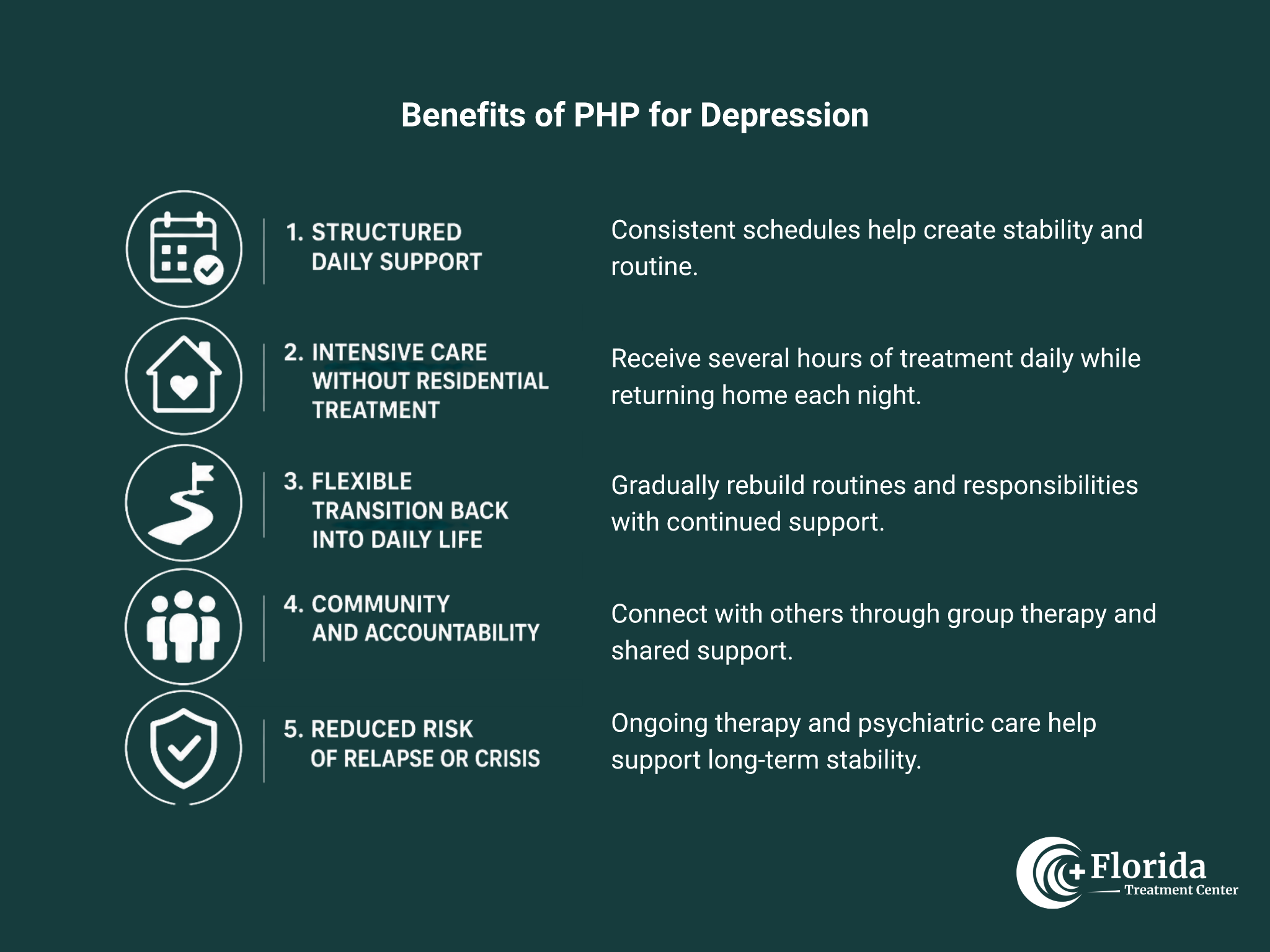
One of the biggest benefits of PHP is daily structure. Depression can make routines difficult to maintain. Having a consistent treatment schedule can help individuals feel more grounded and supported throughout the week.
PHP provides intensive treatment without requiring overnight stays. People receive several hours of therapy and support each day while still returning home afterward. For many individuals, this creates a more comfortable treatment experience.
PHP can help people slowly rebuild routines and responsibilities while continuing treatment. This gradual approach often feels less overwhelming than jumping straight from crisis care back into everyday life.
Depression can feel lonely. PHP programs create opportunities for connection, encouragement, and accountability through group therapy and structured support. Being around others who understand similar struggles can make recovery feel more manageable.
Consistent support may help reduce the risk of worsening symptoms or emotional crises. Learning coping skills, attending therapy regularly, and receiving psychiatric care can all support long-term stability.
Depression and anxiety often happen together. Someone struggling with depression may also experience panic attacks, racing thoughts, constant worry, or physical symptoms of anxiety. PHP programs can treat both conditions at the same time through integrated mental health care.
Treatment may focus on:
Treating both conditions together can improve overall recovery outcomes.
Virtual PHP programs have become more common in recent years. These programs allow individuals to attend treatment remotely from home through secure online platforms.
Virtual PHP may include:
For many people across Florida, virtual treatment offers more flexibility and convenience. Some individuals also feel more comfortable participating in therapy from a familiar environment.
The length of PHP treatment depends on the individual's needs and progress. Most programs involve several hours of treatment per day, usually five days a week. Some people attend PHP for a few weeks. Others may need longer support depending on symptom severity and recovery progress.
As individuals improve, they often transition into:
This step-down process helps people continue building stability after PHP ends.
Not every PHP program offers the same level of care.
When looking for a treatment program, it may help to consider:
The best programs focus on the individual's unique needs instead of using the same approach for everyone.
At Florida Treatment Center, individuals struggling with depression can receive personalized mental health treatment in a supportive and compassionate environment. Treatment plans are tailored to each person's symptoms, goals, and recovery needs. Through therapy, psychiatric care, and structured support, individuals can begin building healthier coping skills and emotional stability. Florida Treatment Center offers flexible treatment options, admissions support, and insurance verification to help individuals access care as smoothly as possible.
Yes. PHP can be very effective for people struggling with moderate to severe depression, especially when symptoms interfere with daily life.
PHP is more intensive than an Intensive Outpatient Program (IOP). PHP usually involves more treatment hours each week and provides a higher level of support.
Some people may continue limited work responsibilities during treatment, but PHP schedules are often several hours per day, multiple days each week.
Many insurance providers cover PHP treatment when it is medically necessary. Coverage depends on the individual's insurance plan and provider.
PHP may help if depression symptoms are becoming difficult to manage through weekly therapy alone or are seriously affecting daily functioning. A mental health assessment can help determine the right level of care.
Stay informed about the latest research in psychology.

Compare PHP vs IOP for depression, including treatment intensity, scheduling, costs, and symptom severity to help determine the right level of care.
.jpg)
Find LGBTQIA therapists in Tampa who understand identity, trauma, and addiction. Florida Treatment Center offers specialized dual diagnosis treatment.
Find hope in scriptures during addiction recovery. Discover powerful Bible verses for strength and healing compiled by Florida Treatment Center.